


Telecom Industry Year-End Quotes: COAI, Nokia India, HFCL, Invenia-STL Networks, MediaTek India
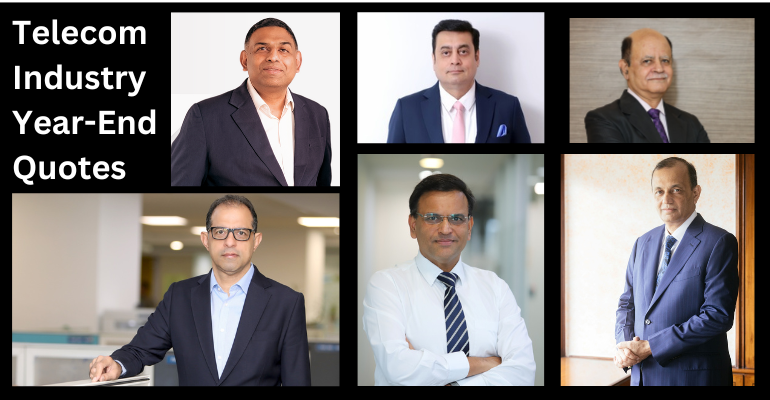


Mahendra Nahata, Managing Director, HFCL said: “The telecommunications infrastructure landscape has reached a critical threshold where capacity, density, and deployment speed determine competitive advantage. India installed over 5 lakh 5G base stations, achieving 85% population coverage, while total wireless data reached 65,009 petabytes in Q2 2025—an unprecedented surge that makes fiberization not optional but existential for network quality. Simultaneously, hyperscale operators now command 44% of global data center capacity with 1,189 large facilities, and this concentration is accelerating. HFCL recognized early that these parallel infrastructure buildouts would require fundamentally different but equally critical solutions. Our response has been deliberate: maximizing production capacity across our manufacturing facilities in India to serve domestic demand from BharatNet and 5G densification globally, while simultaneously ramping up Intermittently Bonded Ribbon cable manufacturing—a technology that enables mass fusion splicing and multiplies fiber density compared to traditional cables. This cable is specifically engineered for hyperscale data center interconnects where installation speed and space constraints are paramount.
Beyond fiber infrastructure, HFCL has emerged as the first company in India to design, develop, and manufacture 5G Fixed Wireless Access equipment for giga-speed wireless broadband connectivity. We have already supplied more than half a million 5G FWA units in the current year across leading 5G operators in the country, enabling rapid last-mile deployment without fiber-to-the-home constraints. This positions us uniquely at the intersection of wireless and wireline convergence. In the backbone infrastructure space, our IP/MPLS Router solutions command more than 60% market share in BharatNet, connecting subscribers from Himachal Pradesh to Andaman & Nicobar Islands in one of the largest deployments of IP/MPLS Routers anywhere. This demonstrates our capability to deliver mission-critical networking equipment at scale across India’s most challenging geographies. We have systematically expanded into Europe and North America, while building local partnerships as global hyperscale capacity expands rapidly to support AI and cloud workloads. HFCL has positioned itself comprehensively—from rural connectivity to high-density data center interconnects, from active 5G equipment to passive fiber infrastructure, from edge routers to core networking—with the manufacturing depth, technology leadership, and global footprint required to help define, and defend, the infrastructure standards of the digital economy.”

Tarun Chhabra, Sr. Vice President and Country Head, Nokia India: “As we commence 2026, the outlook for the industry looks promising. We are witnessing strong momentum across mobile networks, fixed wireless access, and fixed broadband as data consumption continues to grow nationwide. This surging data growth and emerging use cases will drive substantial investment in network expansion and upgrades. Our Chennai factory continues to deliver telecom solutions at scale for domestic and global markets, while our R&D centres in Bangalore and Chennai are pioneering next-generation technologies. Through deep partnerships with leading operators and our commitment to sustainable, energy-efficient networks, we have established ourselves as a trusted partner in building India’s resilient digital infrastructure. Looking ahead, the industry will be increasingly defined by AI-driven network automation and the expansion of data centres and transport infrastructure to support cloud and edge workloads. We are committed to delivering cutting-edge solutions and scalable infrastructure that advance India’s digital and AI ambitions.”

Pankaj Malik, CEO & Whole-time Director, Invenia-STL Networks: “2025 was a year of purposeful digital transformation where the conversation shifted from mere expansion to agile performance. As we look to 2026, the industry will double down on building secure, scalable, and intelligent digital foundations. Smarter automation, stronger network resilience, and cloud architectures designed for speed and performance will define the next phase of growth. At Invenia-STL Networks, we’re partnering with enterprises to strengthen their digital core and lead an increasingly dynamic landscape. The companies that invest early in security, performance, AI adoption, and operational clarity will lead the next wave of India’s digital acceleration.”

Anku Jain, Managing Director, MediaTek India: “As 2026 approaches, India has emerged as a global engine of digital innovation, with consumers demanding flagship performance and hyper-intelligent experiences. Intelligence is rapidly democratizing—we are empowering users with ‘On-Device Generative AI’. Generative and Agentic AI will soon become central to edge-device experiences, while 5G and satellite (NTN) convergence will ensure seamless connectivity, even in the remotest areas. At MediaTek, we see India as both a key market and a hub of engineering excellence, shaping the global semiconductor landscape. With deep R&D roots, we are advancing 5G and edge AI through the Dimensity 5G series and driving smart vehicle innovation via Dimensity Auto. From smartphones and intelligent homes to satellite connectivity and next-gen automotive platforms, MediaTek is enabling a smarter, more connected world.”
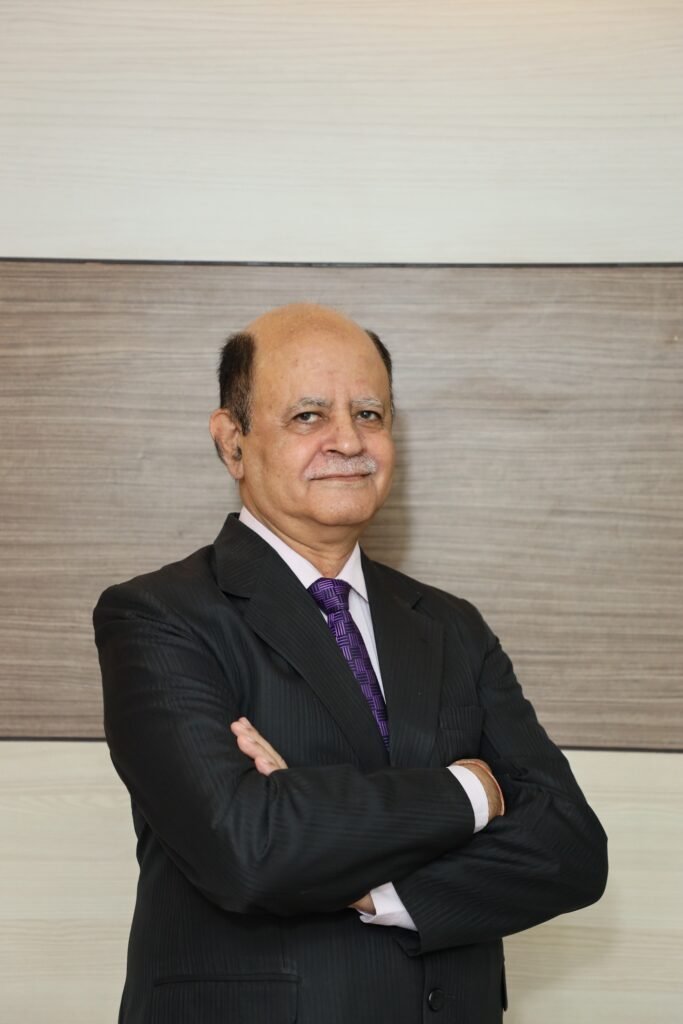
Lt. Gen. Dr. S.P. Kochhar, Director General, Cellular Operators Association of India (COAI): “The Indian telecom industry remained central to the country’s digital growth in 2025, with the overall subscriber base reaching 1.2 billion by November and teledensity rising to 86.76 per cent. Wireless broadband continued to dominate with 954.99 million users compared to 44.82 million wireline connections, supported by rapid 5G adoption that rose to 394 million subscriptions by the end of the year, according to the Ericsson Mobility Report. Network expansion was equally strong as India crossed 5.15 lakh 5G BTS sites and average mobile data usage touched 36 GB per month, with a forecast of 65 GB by 2031. Fixed Wireless Access also grew steadily with subscribers rising to 13.18 million in October across both urban and rural markets. Moreover, telecom exports from India have increased by 72% in the last 5 years, increasing to Rs. 18,406 crores in FY25, from Rs. 10,000 crores in FY21.
The year saw a sharper focus on resilience and self-reliance with operators enhancing cyber defence capabilities through AI-based fraud detection and cloud-security investments that protected millions of users from malicious calls and links. Domestic manufacturing gained momentum under Make-in-India and PLI schemes enabling nearly 60% import substitution in telecom products and turning India into an emerging exporter of 4G and 5G equipment. These advances, combined with continued operator investment in automation and predictive maintenance, positioned the sector for the Bharat 6G Vision which targets a 10% contribution to global 6G patents supported by national testbeds and research initiatives. Policy and Regulatory Milestones: 2025 was also a year of important regulatory developments as the sector moved to align with the new Telecommunications Act, 2023 and the evolving framework for service authorisations. The industry has consistently emphasized that the new authorisation regime should retain the contractual certainty of the current licensing framework to support long‑term investments.
Spam, Fraud and the App based communication services Gap: A defining theme of 2025 was the focused effort to tackle spam calls, scam messages and digital frauds that erode consumer trust. Telecom operators have already implemented a wide range of measures under TRAI’s TCCCPR framework including PE–TM binding, DLT‑based header and content registration and analytics‑based spam tagging on voice and SMS. Building on this, all operators successfully rolled out the P/S/T/G suffix system for commercial SMS headers this year, which helps users instantly identify whether a message is promotional, service‑related, transactional or from the Government. These efforts have delivered noticeable reductions in spam on traditional channels. However, a growing share of unsolicited and fraudulent communication has shifted to App based communication services which currently sit outside the telecom regulatory framework. The industry has repeatedly highlighted that this gap not only weakens consumer protection but also adds to the broader financial strain on telecom networks.
The Hon’ble Telecom Minister Shri Jyotiraditya Scindia set an ambitious target for the industry to contribute 20% to India’s GDP in the next decade. The draft National Telecom Policy correctly identifies this strategic direction and we are engaged in a constructive dialogue with the Government to fine-tune the specifics, but the overall vision aligns with the industry. The policy must cement telecom’s role as a national enabler, not just another vertical industry. The Government has also supported telecom operators with policies like the right of way (RoW), but still several authorities continue to charge exorbitant fees for laying network elements.
An important milestone in this context was the DoT’s landmark decision to mandate SIM‑binding for app‑based communication services, a first‑of‑its‑kind measure globally. Persistent SIM‑binding ensures that a communication app remains continuously linked to the verified mobile SIM and number used during registration, significantly improving accountability and traceability in cases of fraud or misuse. Telecom operators have strongly supported this step, viewing it as a critical layer in India’s defence against rising cyber frauds and platform abuse.
The Government has also taken strong steps to protect network quality by curbing the illegal sale of mobile signal boosters and jammers online. New e‑commerce guidelines notified in mid‑2025 explicitly prohibit listing such equipment, directly addressing an issue the industry has raised for years due to the interference and degradation these unauthorised devices cause. Private Networks, Spectrum and Infrastructure Challenges: The year also saw active debate around captive private 5G networks and direct spectrum allocation to enterprises. The industry’s position remains that India’s extensive public mobile coverage makes the conventional justification for independent private networks largely inapplicable in most geographies and that enterprise 5G needs are best served through spectrum leasing and network slicing by licensed telecom operators. This model ensures efficient spectrum utilization, avoids interference risks and maintains national security safeguards such as lawful interception and traceability which may be harder to enforce in fragmented private deployments. On the spectrum front, the 6 GHz band continued to be a key concern. Global studies have underlined that mid‑band spectrum in the order of 2 GHz will be needed to meet 5G traffic growth and the industry has reiterated the importance of assigning the upper 6 GHz band for IMT services rather than unlicensed use, while also calling for stronger enforcement against illegal Wi‑Fi 6E devices sold via e‑commerce platforms. The WRC 2027 (World Radiocommunication Conference 2027) will be a critical forum for finalizing the global use of the 6 GHz spectrum band, with the Indian telecom operators advocating strongly for its allocation to licensed mobile services (5G and future 6G) via auction. Recognizing this urgency, the Government of India took a landmark step this year by approving the refarming of 687 MHz of spectrum previously held by government agencies such as Defence and ISRO. This initiative, strongly backed by the telcos, raises India’s total IMT spectrum from 900 MHz to approximately 1,587 MHz, a game-changer in addressing network capacity constraints.
The telcos have also urged the Government to reform the spectrum allocation and pricing regime. We believe that the current auction-driven model, combined with high input costs, poses a threat to the financial sustainability of the telecom sector. The spectrum pricing should align with present-day market realities, not legacy revenue expectations. The current method of auctions has been designed more for vertical spaces in telecom. But now, with telecom becoming a horizontal enabler, a new algorithm has to be designed by the Government and by TRAI, taking into account that this is a foundational sector.
Digital Trust, Convergence and the Road Ahead: Across all these developments, the common thread in 2025 was digital trust. Parliamentary recommendations on converging the Telecom, IT and Broadcasting Ministries under a unified umbrella for better policy coherence reflect how deeply communications now cuts across sectors. The industry has welcomed this direction, especially for cross‑channel issues like spam and fraud, that span both networks and App based communication services, and therefore, demand uniform policy treatment. As 2025 closes, the sector’s focus is firmly on strengthening digital trust and ensuring that future networks are secure, reliable and inclusive. With the foundations for 5G scale, spectrum reform and unified safeguards now in place, India’s telecom industry is moving into a phase where innovation and trust will define competitiveness, setting the stage for a decade of resilient and globally benchmarked digital connectivity.”