

IMC 2026 Inaugural Day Convenes Global Leaders to Chart Strategic Blueprints for 6G Testbeds, Satellite Convergence and AI-Native Networks

Asia’s largest digital technology forum deepens focus on Viksit Tech 47, direct-to-device satellite connectivity and the monetisation of AI-native infrastructure
Building on a landmark inaugural session, the 10th edition of India Mobile Congress (IMC) 2026 gathered global industry leaders, policymakers, telecom operators and academia, to advance the forum’s defining theme of ‘Scale Without Boundaries.’ The day deepened strategic discourse across 6G testbeds, direct-to-device satellite connectivity and the monetisation of AI-native digital infrastructure, setting the stage for one of the most substantive programme days for the forum.
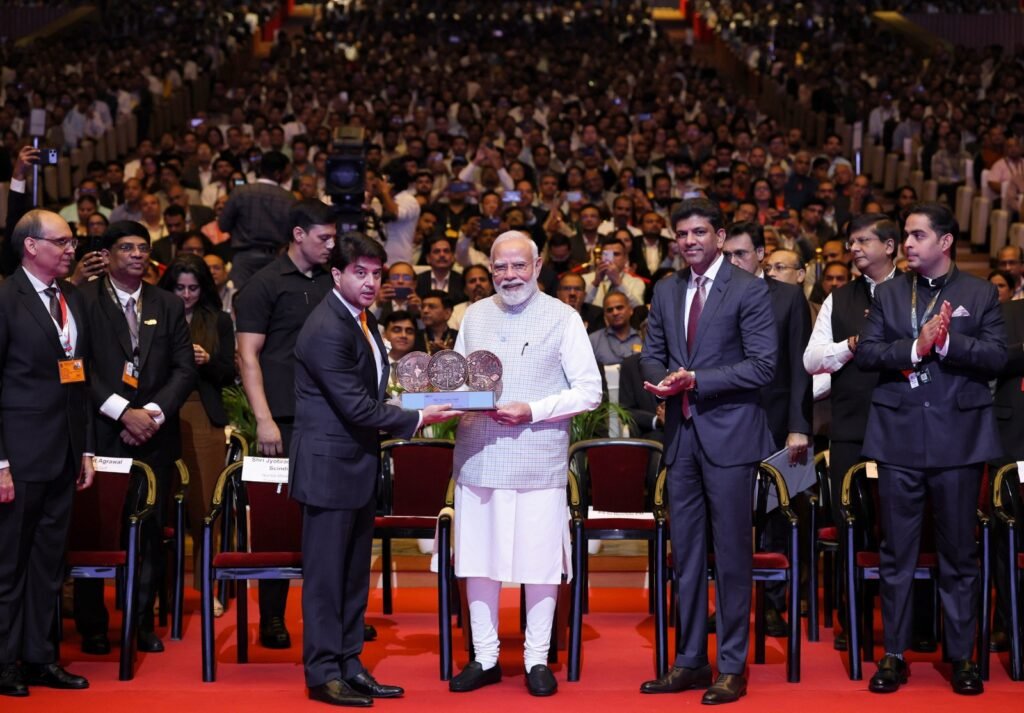
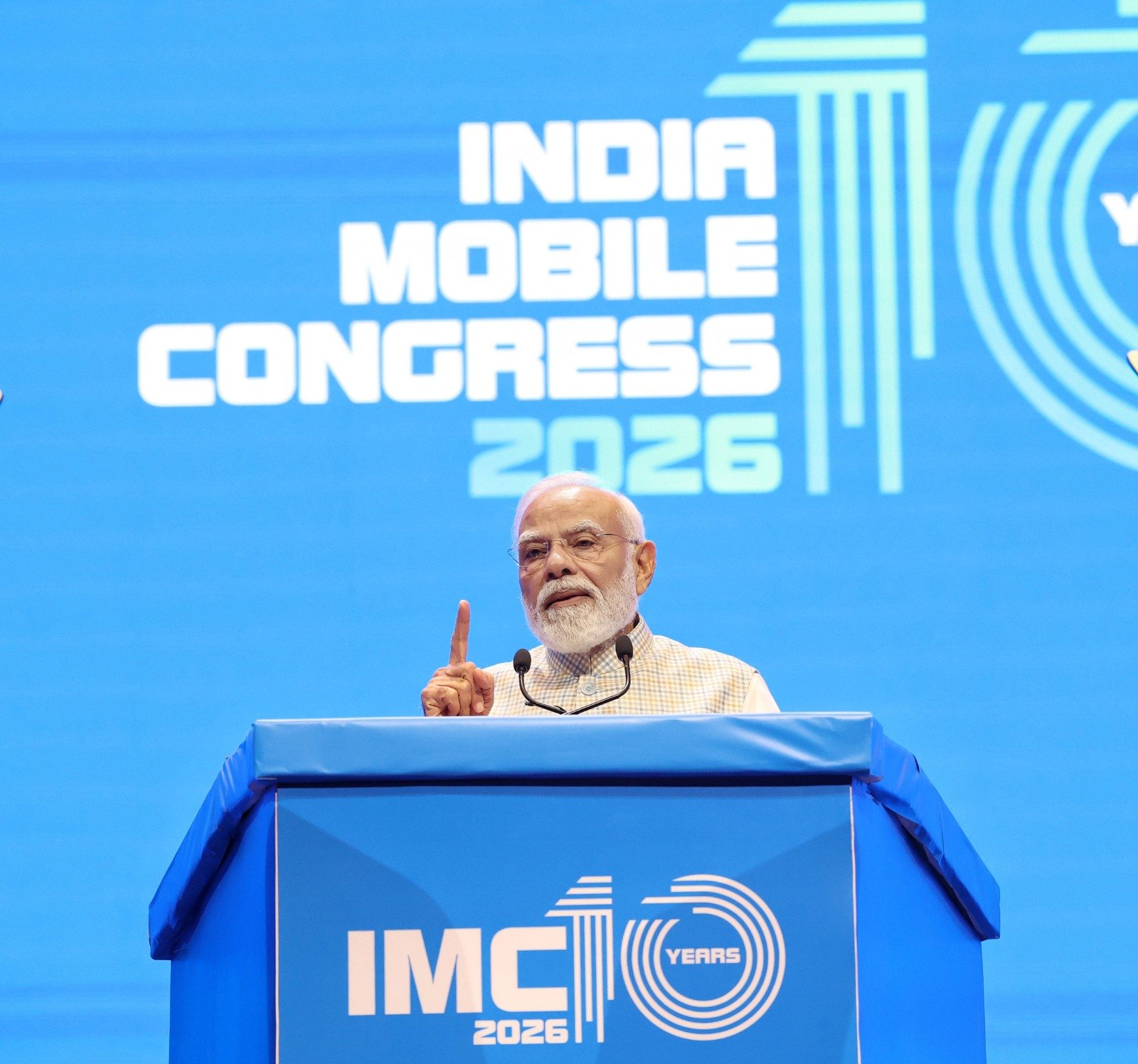
The 10th edition of India Mobile Congress (IMC) 2026 was officially inaugurated today by the Hon’ble Prime Minister of India, Shri Narendra Modi. He lauded IMC for playing a pivotal role in uniting technology, research, industry, investment and ideas to serve humanity. Emphasising that technology scales only through trust, the Prime Minister highlighted India’s rapid evolution from a technology consumer to a global creator. He also underlined that the nation’s next leap is focused on owning core intellectual property, homegrown product design and indigenous semiconductor manufacturing to build a sovereign digital ecosystem.
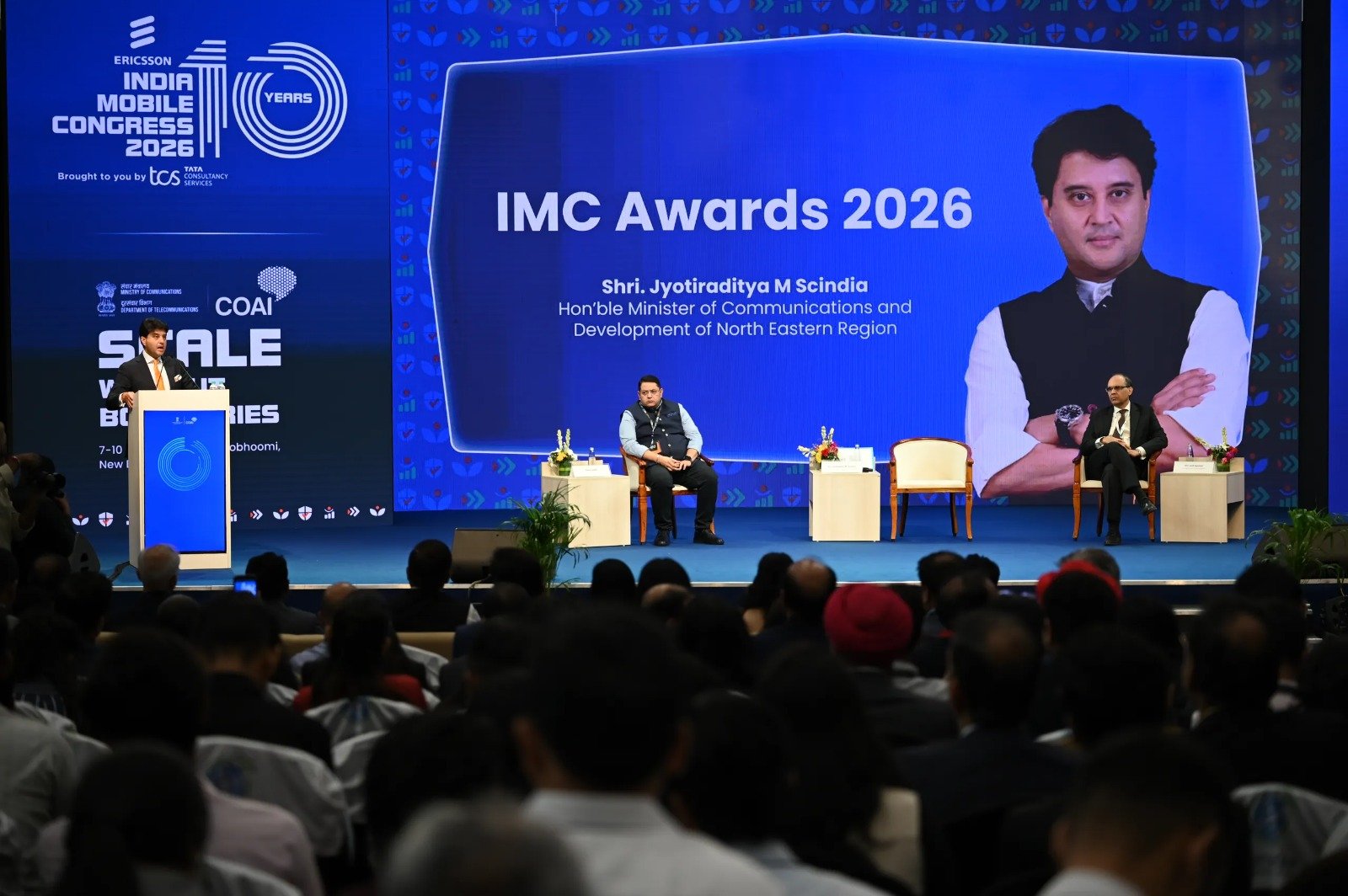
Addressing the forum in the inaugural session, Shri Jyotiraditya Scindia, Hon’ble Minister of Communications and Development of North Eastern Region, outlined a bold vision for the country’s digital trajectory. Highlighting the rapid scale of national connectivity, the Minister shared that India aims to nearly double its 5G user base from 550 million to one billion by 2030. Underscoring India’s growing footprint on the global telecom stage, he also announced that the International Telecommunication Union (ITU) Council has accepted India’s proposal to host the prestigious ITU Plenipotentiary Conference in 2030.
The day’s centrepiece was the Ministerial Programme session ‘Scale Without Boundaries: Investing in the Next Billion Digital Connections’, chaired by Hon’ble Minister of Communications and Minister of Development of North Eastern Region Shri Jyotiraditya M. Scindia. The session featured an address by Estonia’s Minister of Justice and Digital Affairs Liisa-Ly Pakosta, and brought together Japan’s Vice-Minister for International Affairs, Hideo Fuseda; ITU’s Director of Telecommunication Standardization Bureau, Seizo Onoe; and GSMA Chief Regulatory Officer, John Vincent Giusti, to chart a shared global blueprint on investment, infrastructure sharing and last-mile connectivity for rural and underserved communities.
Frontier connectivity took centre stage with the formal inauguration of the 3rd International Bharat 6G Symposium 2026, moving the conversation from foundational theory to real-world testbeds and deep-tech startup ecosystems. Concurrently, satellite communications advanced into commercial focus across tracks dedicated to building the foundation for the policy on satcom, direct-to-device connectivity and the convergence of terrestrial and space-based networks. Enterprise tracks curated with GSMA tackled the operational realities of artificial intelligence, spotlighting AI-Native Telecom Networks: intelligence, automation and accountability, enterprise value via network APIs and digital trust as a national capability. The day also marked the presentation of the prestigious IMC Awards, celebrating industry innovators and ecosystem pioneers.
Organised by the Department of Telecommunications (DoT), Ministry of Communications, Government of India and the Cellular Operators Association of India (COAI), the landmark 10th edition of IMC is set to welcome over 1.5 lakh attendees from more than 100 countries. Across four days, the forum brings together 600+ partners and exhibitors, 500+ startups and 900+ thought leaders, showcasing more than 2,000 technology use cases across over 120 sessions. IMC 2026 covers established anchor sectors including 5G and 6G, next-generation AI networks, semiconductors, non-terrestrial networks, cybersecurity, quantum communication, enterprise transformation, circular economy and ESG and electronics manufacturing.
Quotes from industry leaders and policymakers on Inaugural day of India Mobile Congress 2026:
Shri Jyotiraditya Scindia, Hon’ble Minister of Communications and Development of North Eastern Region said, “India has demonstrated that digital scale need not come at the cost of affordability. A network becomes truly meaningful when it combines human capabilities. UPI, Aadhar and digilocker demonstrate transformative power of affordable connectivity. Mobile phones have become bank branches and telecom networks have become India’s highway. As we approach 2030, stakes are even higher. In an AI driven world, those without connectivity can miss out on employment and accessibility to resources. We need deeper international cooperation, harmonising spectrum approaches and developing innovative financing. By adding a billion people to the digital ecosystem, we will add innovators and entrepreneurs. Our responsibility is to ensure that geography or income does not limit their chances or opportunities.”
Lt. Gen. Dr. S.P. Kochhar, Director General, COAI said, “As India Mobile Congress marks a decade, Prime Minister Narendra Modi’s vision of a digitally empowered India sets the tone for the next decade of transformation. India’s robust digital infrastructure has created a strong foundation for a future driven by connectivity, AI, 6G and emerging technologies. As technology becomes more pervasive, building awareness around risks such as deepfakes and ensuring trust, safety and responsible innovation will be equally critical. The next decade is about taking India’s digital journey from scale to global impact, positioning the country as a creator and trusted technology leader for the world.”
Magnus Ewerbring, CTO – APAC, Ericsson said, “Networks are becoming increasingly intent-driven, operators specify the outcome or service they want, and the network dynamically determines how best to deliver it. This will be critical as operators look to offer more differentiated and personalised services, including on-demand network capabilities tailored to specific customer needs. Moving from pre-configured network resources to dynamic, intelligent configuration will require a fundamental shift in how networks are designed and operated. Ultimately, greater autonomy will enable operators to deliver these new services at scale without creating an unsustainable burden of manual configuration and intervention.”
Dr. Vinosh Babu James, Director, Technical Standards, Qualcomm said, “When we talk about device availability, the limitation today is really about integration into mobile phones and the promise of scale. It is not a technology limitation. The feature has already reached premium phones in some markets, but for it to become affordable in India, it has to trickle down to the mid-tier, low-tier and affordable segments. That is an economies-of-scale issue. The bigger question is the use case. Emergency SMS is already being addressed through terrestrial networks, so it is not necessarily the killer application. The next step is to bring in premium-paying customers and identify what additional value we can offer through satellite connectivity that cannot be delivered through terrestrial services.”
Rahul Vatts, Group Chief Regulatory Officer & Director – Corporate Affairs, Bharti Airtel said, “India needs a more unified framework for trust and safety across the digital ecosystem. While the government, platforms and operators have taken measures in this direction, there is a broader ecosystem, including OTT and technology providers, that also plays a critical role. As participants in this ecosystem, we need to move towards a more coordinated approach that brings different stakeholders together and creates consistent standards for building a safer and a more-trusted digital environment.”
Luciana Camargos, Head of Spectrum, GSMAsaid, “Direct-to-Device can be a very valuable service, but there are a few important issues that need to be addressed before we can realise its full potential. We need a regulatory framework that enables the service while ensuring that terrestrial networks are protected from interference. Device availability is another important consideration, particularly where satellite services rely on specific spectrum bands. The devices need to be available at scale and, equally importantly, they need to be affordable. Affordability is a problem for the mobile industry, the satellite industry and society in general. Governments and industry therefore need to work together to address the barriers to adoption, including affordability and digital literacy, so that connectivity can reach those who need it most.”
Lt. Gen. AK Bhatt (Retd.), Director General, Indian Space Association (ISpA) said, “As satellite connectivity becomes increasingly integrated with terrestrial networks and the broader 5G and 6G ecosystem, sovereignty and security will become central to how countries approach the sector. The concern is not whether global players can technically meet these requirements, but whether they can consistently operate within the security and governance guardrails defined by each nation. Geopolitical events have reinforced the need for resilient and trusted communication infrastructure, making this an issue that extends well beyond India. The way forward is therefore to establish clear, practical guardrails that protect national interests without becoming barriers to innovation.”
Seizo Onoe, Director, Telecommunication Standardization Bureau, International Telecommunication Union (ITU) said, “Connectivity remains fundamental to building an inclusive AI ecosystem. Continued investment in broadband networks, data centres, cloud and edge capabilities is essential, alongside ensuring that telecom, power and data centre infrastructure evolve together. At the same time, international and cross-industry collaboration, supported by consensus-based standards, will be critical to building trust and enabling sustainable growth. Collaboration across countries, industries and stakeholders will be key to expanding AI capacity and ensuring that its benefits are accessible to all.”
Sridhar Gollapudi, Head of Telco, Industry Solutions, Google Cloud said, “As AI workloads become increasingly intensive, the network will need to become far more programmable and responsive to how data moves between the cloud and the edge. The opportunity lies in making networks easier for developers to interact with, while intelligently determining where workloads and datasets should be processed for optimal performance. onvergence of programmable networks, edge and cloud can play a critical role in making AI infrastructure more dynamic and efficient.”
Anku Jain, Managing Director, MediaTek said, “If India has to grow over the next 20 years, there is a need to unleash the entrepreneurship mindset and create an environment for more startups and companies. The venture capital ecosystem is becoming more mature, and the new generation is also ready to take more risks and become entrepreneurs. The government is supporting this ecosystem through initiatives such as the RDI fund for deep-tech startups, particularly in areas such as semiconductors and AI. These efforts need to grow further, along with manufacturing, to enable India to become a stronger startup nation.”
Ajay Jain, Executive Vice President – Networks, Bharti Airtel said, “AI and autonomous networks are not about replacing engineers; they are about making networks smarter and enabling people to focus on higher-value work. As network complexity grows, AI can help automate mundane tasks, continuously optimise network performance and identify where capacity needs to scale. Autonomous networks can also enable operators to introduce new services and improve customer experiences. The real shift is towards networks that can increasingly monitor, optimise and adapt themselves, while allowing engineers to focus on more strategic challenges.”
Sangeeta Roy, Director – Global Partner Sales Business, Intel said, “Scaling enterprise AI is about raw compute and it requires breaking down infrastructure complexity. By abolishing proprietary lock-in, embracing AI everywhere from edge to cloud and simplifying the software layer so developers never have to rewrite code for different hardware, we are empowering India’s enterprises to deploy AI securely, cost-efficiently, and at scale.”