



- Successful ViaSat‑3 F3 launch advances Viasat’s global, multi-orbit network strategy.
- Designed to deliver 1 Tbps of capacity, ViaSat‑3 F3 to significantly expand flexible, resilient, high-speed connectivity across the Asia-Pacific region later this year
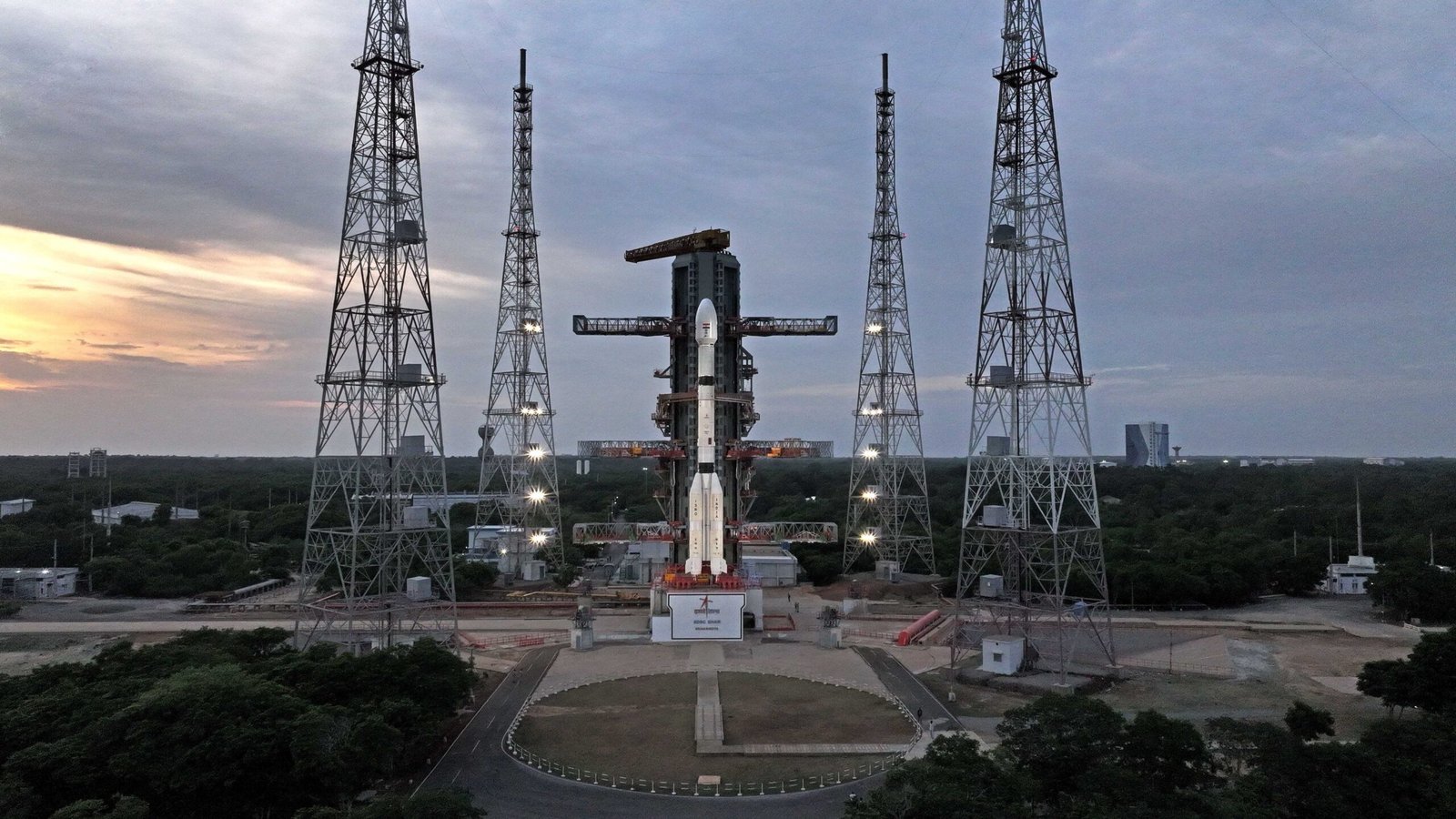
Viasat, Inc. (NASDAQ: VSAT), global leader in satellite communications, today announced the successful launch and initial signal acquisition of the ViaSat-3 Flight 3 (F3) satellite. The satellite successfully separated from the launch vehicle’s upper stage just under five hours after liftoff, with initial signals acquired minutes later, confirming the satellite is healthy in orbit and ready for the next phase of operations. ViaSat-3 F3 lifted off earlier today at 10:13 a.m. EDT aboard a SpaceX Falcon Heavy rocket from Launch Complex 39A (LC-39A) at Kennedy Space Center in Florida.
Next-Generation Satellite Set to Unlock APAC Capacity Expansion and Global Network Scale
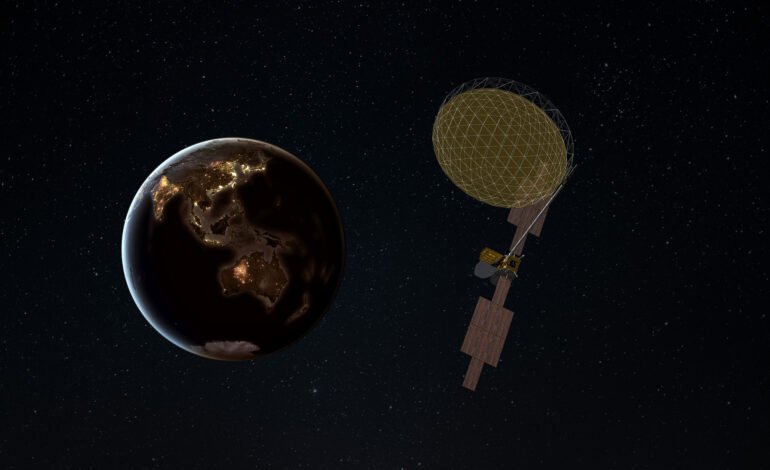
ViaSat-3 F3 will provide services over the Asia-Pacific (APAC) region. Designed to deliver over 1 Terabit per second (Tbps) of throughput capacity, the satellite leverages innovative payload design and advanced beam‑forming technology to optimize and steer immense capacity in real time, maximizing spectral efficiency and enabling bandwidth to be concentrated where demand and returns are highest. The satellite’s efficient, flexible bandwidth deployment capabilities are a significant differentiator for commercial mobility and defense customers as demand for resilient, high-quality satellite communication services (SATCOM) continue to accelerate.
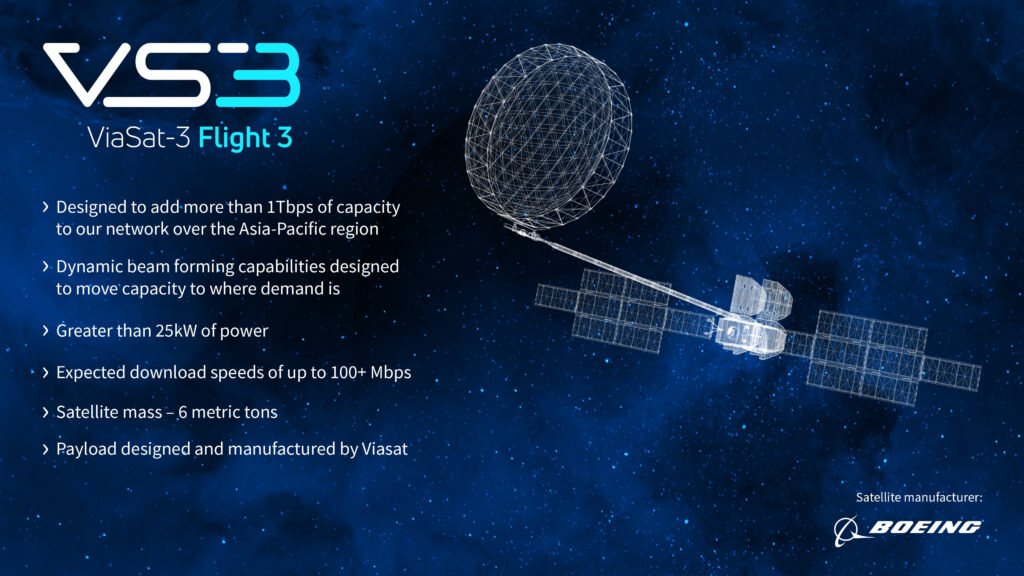
ViaSat‑3 F3 completes Viasat’s next generation ViaSat‑3 satellite constellation and marks a key milestone in the company’s global, multi‑orbit network strategy. With ViaSat‑3 F1 in service since 2024 and ViaSat‑3 F2’s in-orbit testing advancing, the launch of F3 positions Viasat to further scale global capacity and performance.
Mark Dankberg, Chairman and CEO, Viasat said, “As we celebrate the successful launch of ViaSat-3 F3, it’s once again important to recognize this achievement as a testament to the dedication and expertise of hundreds of Viasat team members and the close collaboration with our partners. ViaSat-3 F3 will provide greater resilience for government and commercial mobility users, leveraging powerful beamforming capabilities to quickly deliver bandwidth in and around geopolitical and other hot spots. As we look forward, our ViaSat-3 satellites will significantly scale our overall network’s performance, strengthening our ability to deliver the capacity for key growth initiatives globally.”
Gautam Sharma, Managing Director, Viasat India said, “The successful launch of ViaSat‑3 F3 is an exciting moment for Viasat as we aim to add significant capacity and expanded connectivity for users across India and the wider Asia‑Pacific region. Expected to enter service later in 2026, this satellite is designed to deliver an unprecedented combination of ultra‑high capacity, flexibility, and resilience to support services across markets. ViaSat-3 F3 will enable us to dynamically deliver bandwidth where and when it’s needed most, whether that’s along busy aviation corridors, major maritime routes, remote communities, or for government operations. This underscores Viasat’s long‑term commitment to enabling regional and global network services with secure, high‑performance connectivity that scales with demand.”
Path to ViaSat-3 F3 Service Entry
Following its successful launch, the satellite will now deploy its solar arrays and begin navigating to its final geostationary orbital location. Then, ViaSat-3 F3 will undergo final deployments, including its reflectors, before undergoing in-orbit testing and network integration, which is critical to effective operations and services. ViaSat-3 F3 is currently anticipated to enter service in late summer.