



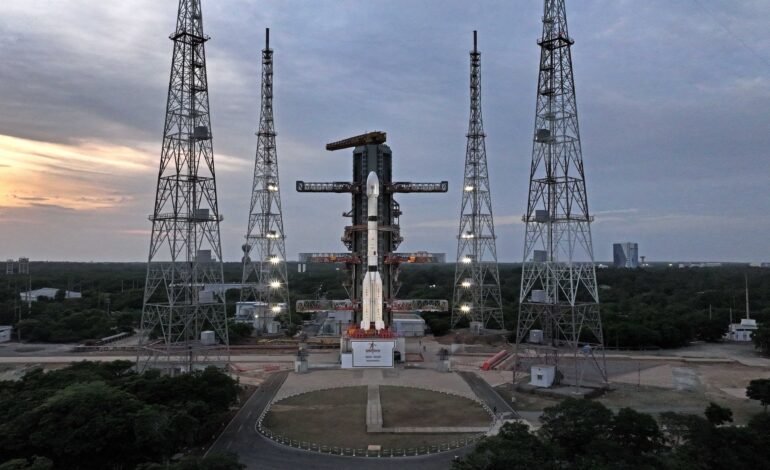

The successful launch of ISRO’s GSLV-F17/EOS-05 mission marks an important milestone for India’s space programme and demonstrates the resilience and engineering capabilities of the country’s space agency, the Indian Space Association (ISpA) said.
Congratulating ISRO on the mission, Lt. Gen. A.K. Bhatt (retd.), Director General, ISpA, said the EOS-05 satellite’s geosynchronous imaging capabilities could provide persistent, high-frequency observation of large regions, offering significant advantages over periodic satellite revisits.
According to Bhatt, the capability could be strategically valuable for monitoring rapidly changing weather systems, floods and forest fires, as well as agriculture and natural resources. It could also strengthen situational awareness across India’s land and maritime domains.
“The real opportunity now lies in translating this rich, frequent satellite data into actionable intelligence through India’s private space and geospatial ecosystem,” Bhatt said.
He added that the mission also highlights the growing partnership between ISRO and India’s private space industry, with private companies increasingly contributing components and expertise to national space systems.
Bhatt said that as India’s space ecosystem matures under supportive policy frameworks and with continued backing from ISRO, milestones such as the GSLV-F17/EOS-05 mission would help build greater confidence and enable the further expansion of commercial participation in the sector.
Amit Kumar, Co-Founder & COO, Suhora Technologies, said “We congratulate ISRO on the successful launch of EOS-05. A satellite that continuously observes India from geosynchronous orbit is a significant addition to the country’s earth observation capability, complementing the low-Earth orbit and radar data we work with daily. Its persistent, wide-area coverage holds particular promise for maritime surveillance, a potential game changer for tracking vessel activity, illegal fishing and maritime security, alongside faster detection of floods, fires and infrastructure changes. This represents not only a technological milestone for India, but also an important opportunity for Indian space-tech companies to build innovative applications around indigenous Earth Observation capabilities.”