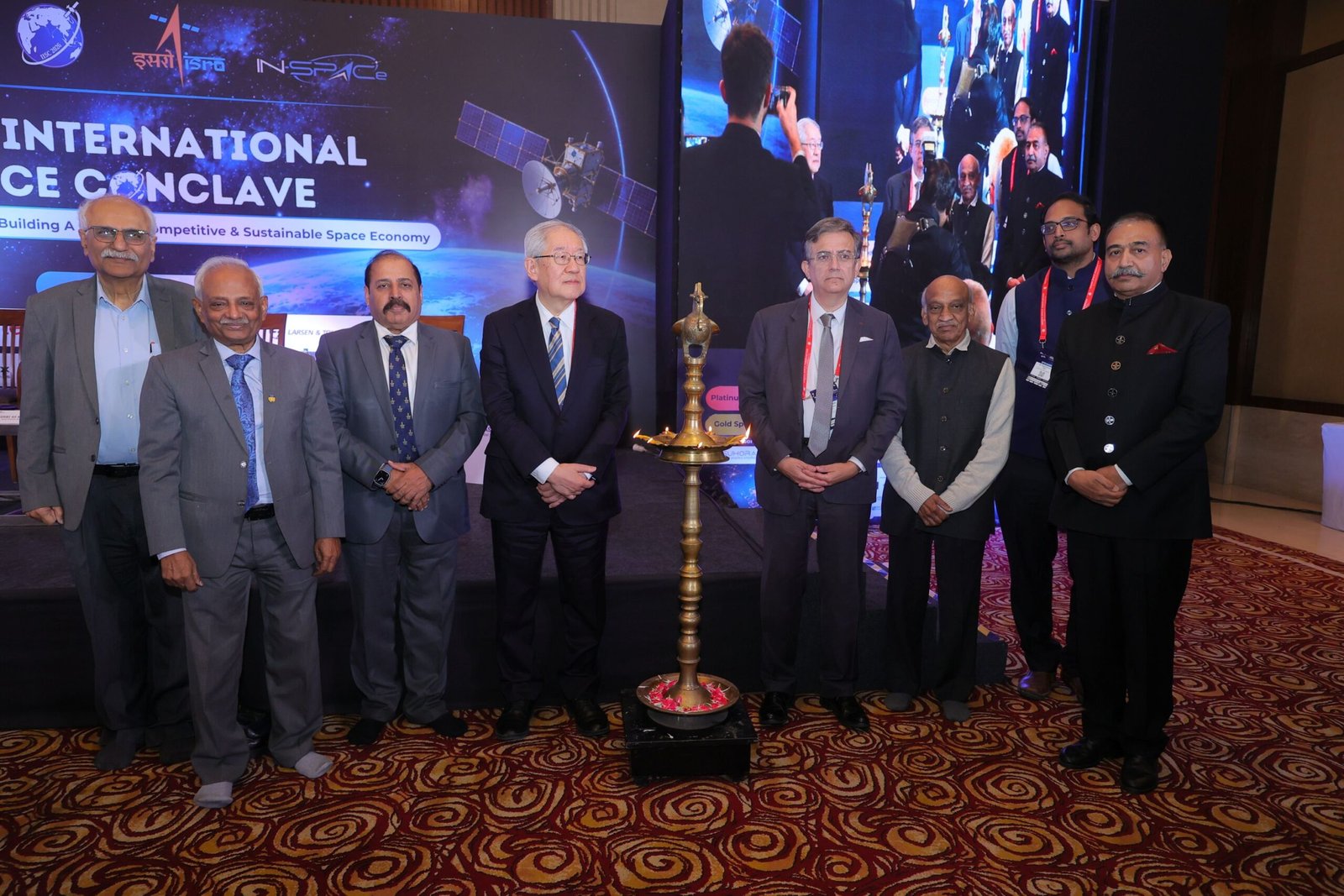
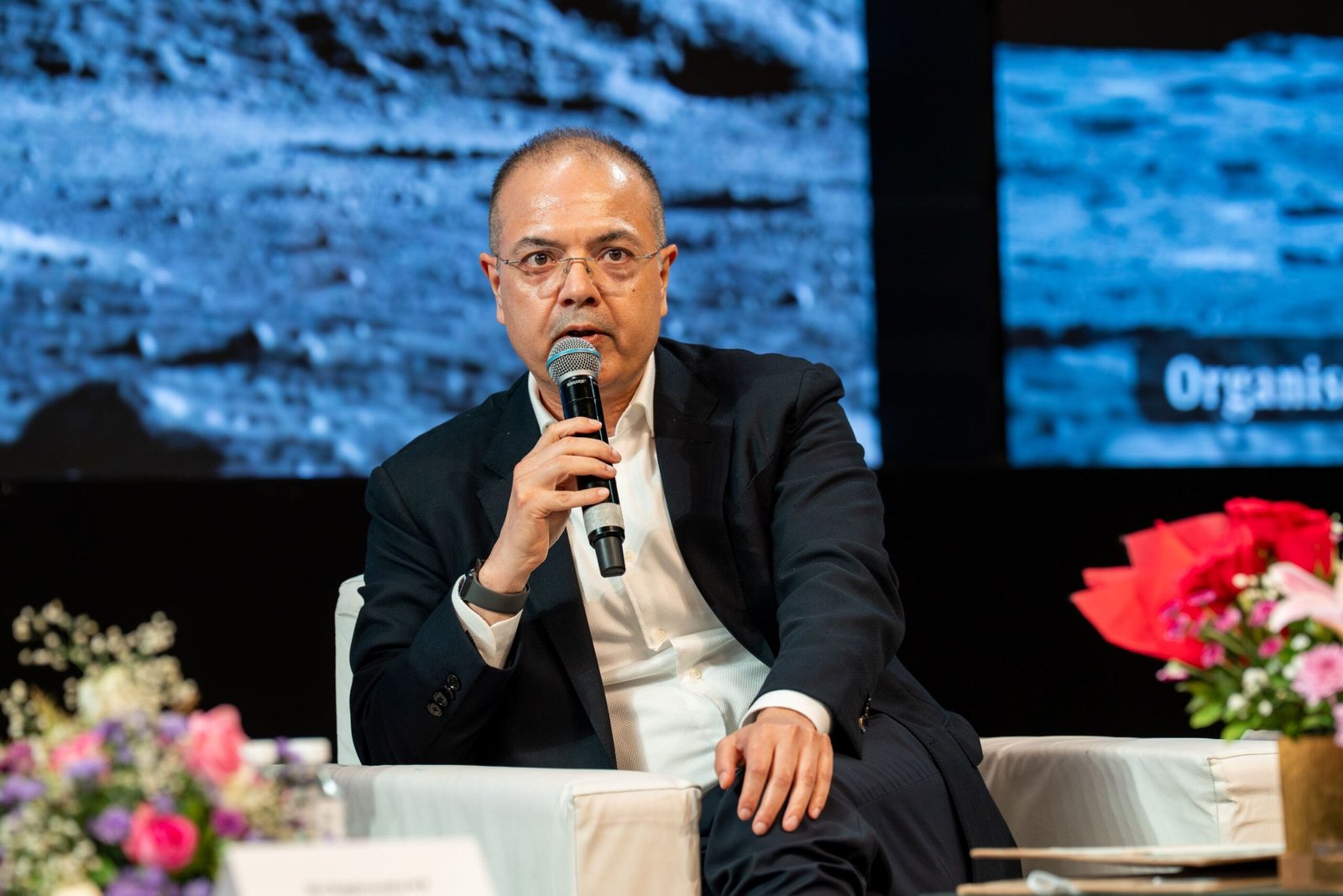

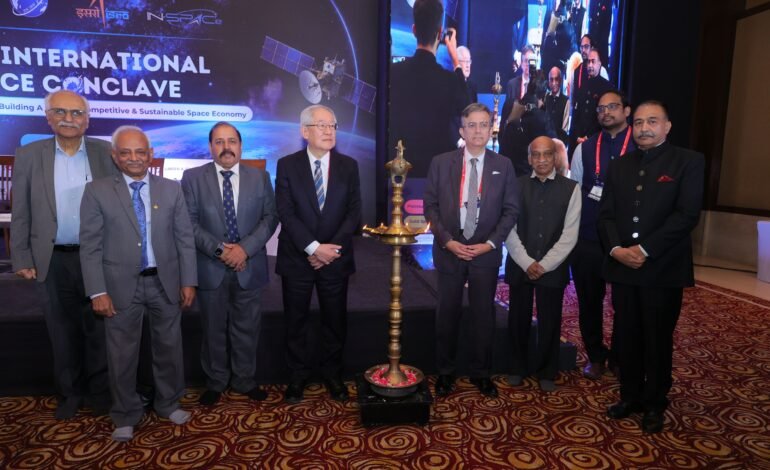

As India’s space sector moves towards its next phase of growth, the focus is shifting from establishing technological capabilities to building the industrial scale, investment flows and collaborative frameworks needed to sustain its global competitiveness. This was a key message emerging from the first day of the 5th edition of India International Space Conclave 2026, organised by the Indian Space Association (ISpA) in collaboration with ISRO and IN-SPACe. Held under the theme ‘Orbital Perspectives 2026: Building a Globally Competitive and Sustainable Space Economy’, the conclave features participation from policymakers, space agencies, industry leaders, investors, researchers and diplomatic representatives from nine countries, with 12 sessions across two days.
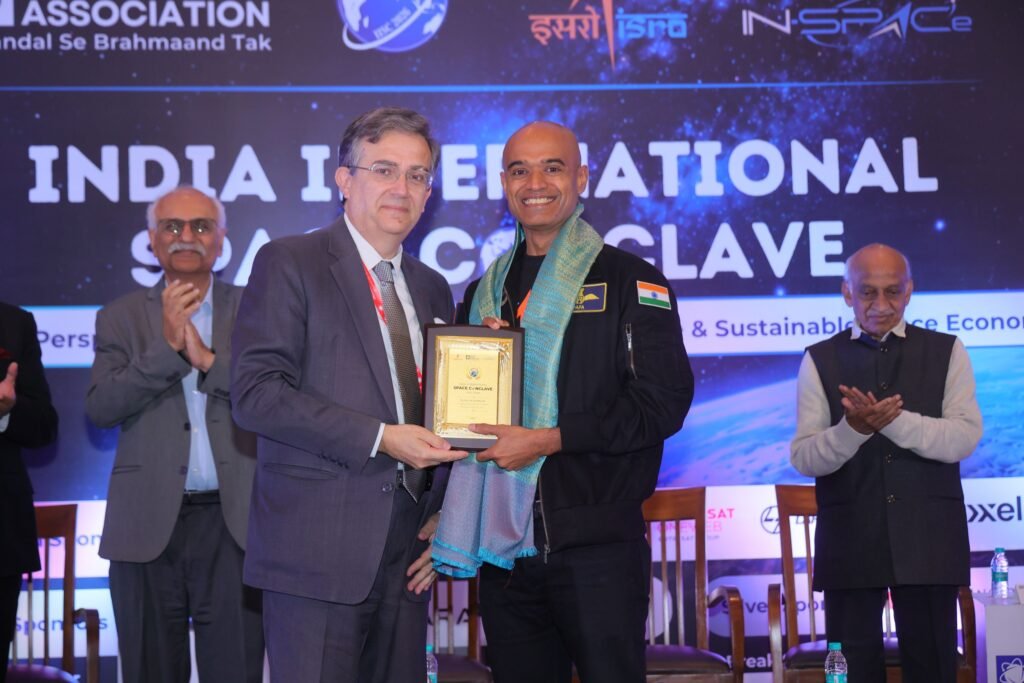
The inaugural session on the first day brought together policymakers, industry leaders and diplomats, including H.E. Dr. Thierry Mathou, Ambassador of France to India; A.S. Kiran Kumar, Former Chairman, ISRO and Member of the Space Commission; Air Cmde Prasanth Balakrishnan Nair, Astronaut, ISRO; AT Ramchandani, Sr. VP & Head – L&T Precision Engg & Sys and Chairman, ISpA; Lt. Gen. AK Bhatt (retd.), DG, ISpA; and Naga Bharath Daka, Co-founder, Skyroot Aerospace and other industry stakeholders. The inaugural day witnessed a packed hall, with a full house of delegates, industry representatives, policymakers, diplomats and other stakeholders in attendance, reflecting the strong interest and engagement across the space ecosystem.
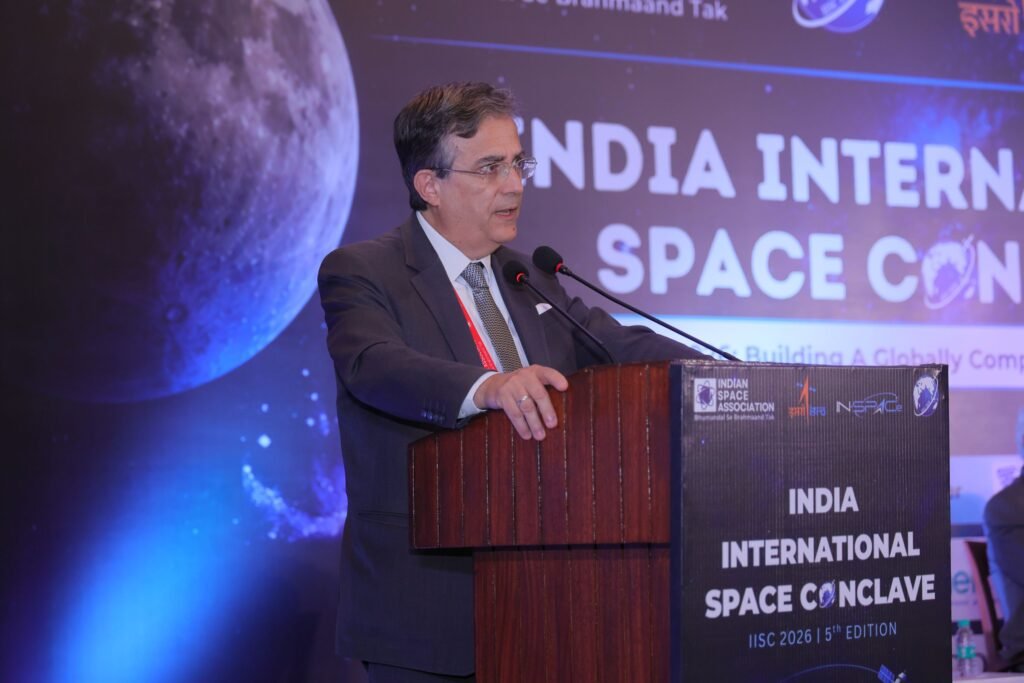
In his inaugural address, H.E. Dr. Thierry Mathou, Ambassador of France to India said, “Our exceptional and long-standing space cooperation with India is, above all, the result of six decades of cooperation, strengthened under our global strategic partnership. We both share the concept of strategic autonomy. Strategic autonomy doesn’t mean that you isolate yourself from your partners; on the contrary, it means that you build up your own capacity, your own analysis, your own decision-making process to be a useful and reliable partner. The next chapter of our space partnership must bring together the full strengths of our respective ecosystems, our space agencies, companies, startups, investors, researchers and academic institutions. By combining French technological expertise with India’s growing capabilities and entrepreneurial dynamism, we can together develop solutions for our two countries as well as for global markets. Our challenge is to transform this cooperation into operational industrial cooperation.”
A.S. Kiran Kumar, Former Chairman, ISRO and Member of the Space Commission said, “If India is moving ahead in space technology from capability to capacity, it is only possible when more and more individuals get into the business. And we are seeing that happening. Already, many of the young entrepreneurs are challenging the basic concepts that exist in operating in space systems. The world is rapidly changing, and what is happening in one domain can significantly change the manner in which activity happens in others. Today, if you are looking at how things are changing because of quantum technology or artificial intelligence and superintelligence, what is going to happen in terms of the activities that are done by states is worth looking at. The approach of India is very different and it is ready to cooperate and work with partners and enable them to do what they want to do rather than only dominate. It is in the interest of humanity that nations come together, discuss regulation and ensure that technology benefits humanity.
Air Cmde Prasanth Balakrishnan Nair, Astronaut, ISRO said, “Civil-military fusion is the future, and if there is one country that can think about it, it is India. When I say civil-military fusion, I mean bringing together two facets of society, civil and military, because the future of space sovereignty will depend on how well we are able to work together. India needs to be on mission mode, and the one thing you can expect today on mission mode is space sovereignty. When I say space sovereignty, AI sovereignty also comes into it, because strategic autonomy and trust is what India needs. India and India Inc., all the startups, all the organisations in space, IN-SPACe, ISpA, ISRO, the Indian Air Force and the whole of government need to come together.”
AT Ramchandani, Sr. VP & Head – L&T Precision Engg & Sys and Chairman, ISpA said, “Since 2026 will be remembered as the year Indian private space stopped being a promise and became a fact. The gap is not in talent. The gap is not in ambition. The gap is in flow. This steady, repeatable, industrial flow of orders, launches, hardware and capital that turns a brilliant first into business. Our task now is to move from first to flow. Launch vehicles coming off assembly lines against the published manifest. Satellite buses built in batches, not one at a time. Tier 2 and Tier 3 suppliers delivering qualified space-grade parts on schedule every time. Policy reform unlocked this ecosystem. Policy will now be required to scale it. It is important that the Space Activities Bill be brought before Parliament at the earliest. Make Indian space a reliable, competitive industry that serves our citizens, secures our nation, partners with the world, and builds a Viksit Bharat by 2047.”
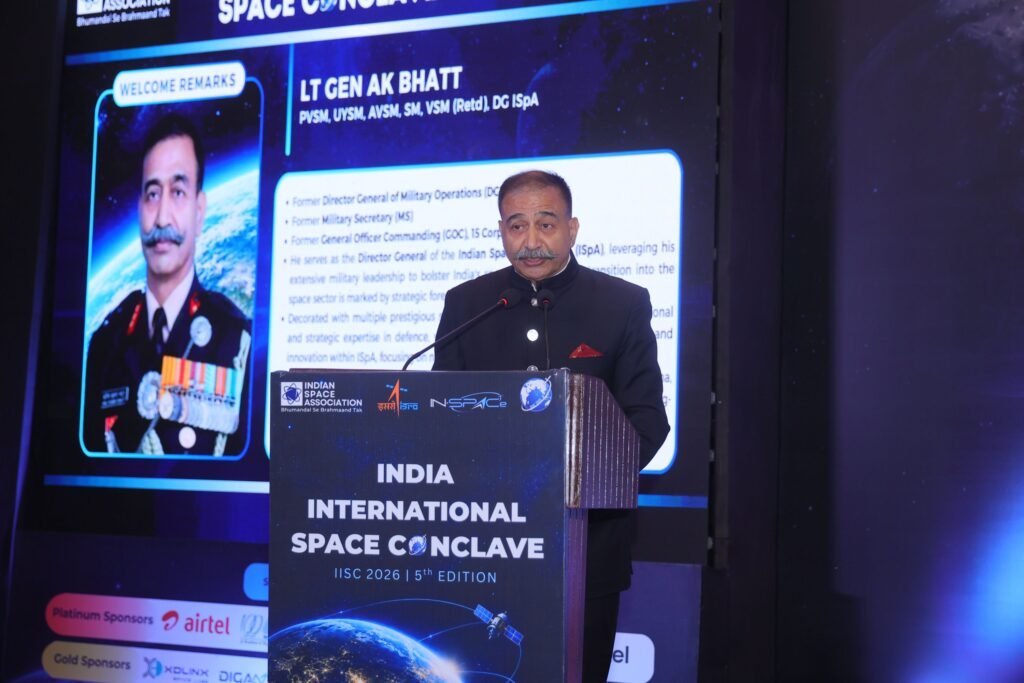
Lt. Gen. AK Bhatt (retd.), Director General, Indian Space Association (ISpA) said, “We have technology and talent in abundance. What decides whether an Indian startup becomes a global economy is capital. Patient, informed capital that understands long gestation and high risk. Our national ambition of a $44 billion space economy within the next decade will not be met by grants only. We are all aware that a single launch failure or one anomaly in orbit can wipe out years of work of a young company. India needs its own capacity to understand the price and undertake space risk. We need resilient solutions for India and we need the Indian industry to build on it.”
The first day also witnessed several institutional and industry partnership initiatives aimed at strengthening collaboration across India’s space ecosystem, which included MoUs between ISpA and SSIP, IIT Tirupati and Chandigarh University, alongside an MoU between Pixxel and IIT Kanpur, CS Tech and Centum Electronics Ltd.
The first day of the conclave featured a series of discussions and industry interactions covering key aspects of India’s evolving space ecosystem. The sessions included the India-France Space Partnership, bringing together representatives from the French space industry and Indian space companies to explore strategic, industrial and global collaboration opportunities; LEO Satcom and the Future of Satellite Connectivity; Financing the Emerging Space Economy 2036; The Future of Earth Observation: Advancing Satellites, Payloads and Sensor Technologies; Regulatory and Legal Frameworks for the Space Industry and Responsible Space Operations; and Fostering a Collaborative and Sustainable Orbital Economy and Strengthening Partnerships for ISAM. The programme also featured an Ignite Talk by Air Cmde Prasanth Balakrishnan Nair, Astronaut, ISRO, and a roundtable on space-enabled disaster resilience and national security.
Following a power-packed inaugural day, the Day 2 of the conclave on 24th November is set to witness the presence of distinguished guests including Dr. Jitendra Singh, Hon’ble Union Minister of State for Science & Technology, Earth Sciences and Space and Dr. V Narayanan, Secretary, Department of Space, Chairman, Space Commission and Chairman, ISRO alongwith other dignitaries from across the government and the global and Indian industry.