


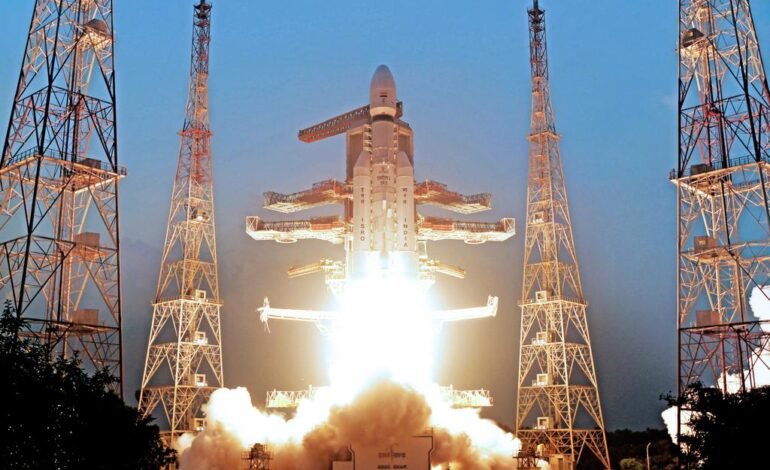

As India commemorates National Space Day on August 23, industry leaders have highlighted the rapid growth of the country’s private space ecosystem and emphasised the growing importance of downstream applications such as satellite communications, Earth observation and geospatial intelligence.
“India is emerging as a full-stack space economy, with growing strengths across launch, satellite infrastructure and a range of downstream space applications,” Bhatt said.
Lt. Gen. AK Bhatt, Director General, Indian Space Association (ISpA), said India’s private space ecosystem has moved beyond capability building and is increasingly translating innovation into market opportunities.
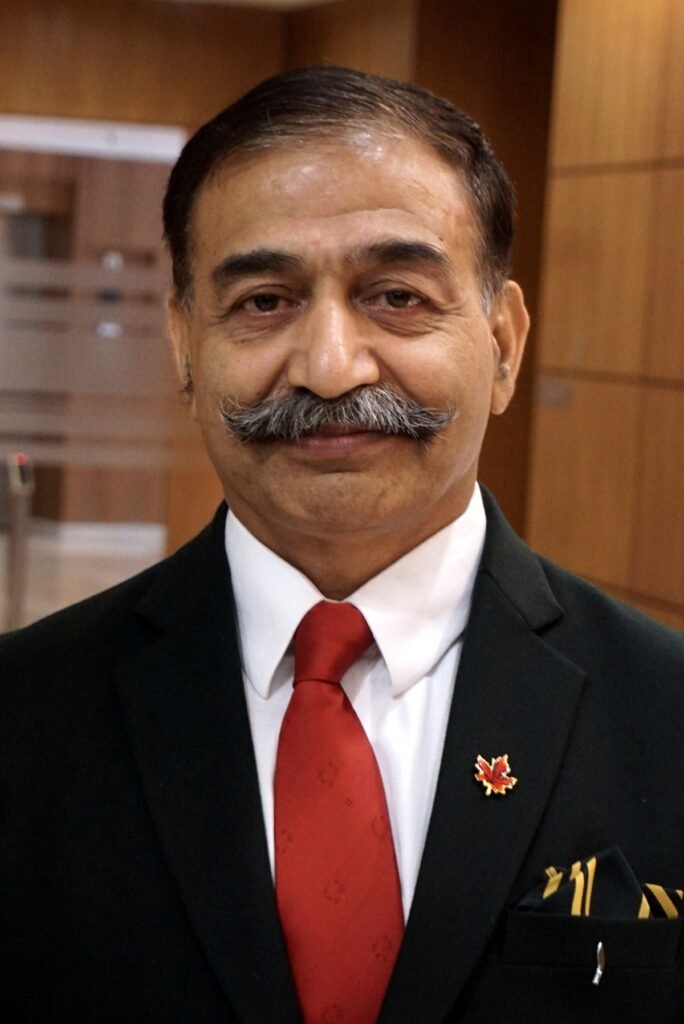
He noted that recent successes by private space companies have demonstrated India’s ability to develop globally competitive capabilities, sending a positive signal to investors and international partners.
According to Bhatt, the next phase of India’s space journey will be driven equally by downstream adoption. Applications in agriculture, climate monitoring, urban planning, disaster management, connectivity and national security are expected to play a larger role in determining the scale of India’s space economy.
He also stressed the need to strengthen manufacturing, supply chains, long-term capital and specialised talent to sustain the sector’s growth and enable Indian companies to capture a larger share of the global space market.
Meanwhile, Viasat India Managing Director Gautam Sharma highlighted the role of satellite communications in strengthening India’s critical infrastructure.

On National Space Day, Sharma commended the government and ISRO for their leadership in developing the country’s space ecosystem and fostering public-private partnerships.
Viasat, he said, has maintained a four-decade relationship with the Indian government, supporting maritime safety, defence communications and emergency response. The company provides satellite communication services to the Indian Navy, Coast Guard and offshore infrastructure, while its L-band safety services support thousands of Indian seafarers.
Sharma said Viasat is also working with Indian startups, researchers and academic institutions, including IIT Hyderabad and IIT Chennai, to develop next-generation space technologies by combining global satellite expertise with India’s growing talent base.
“Satellite communications is no longer a niche capability, it is critical national infrastructure,” Sharma said, adding that it can extend connectivity to defence, disaster response, maritime and remote areas that cannot be adequately served by terrestrial networks.
Krishanu Acharya, CEO and Co-Founder of Suhora Technologies, also underscored the growing importance of the downstream space economy.

According to Acharya, India’s private space story has traditionally focused on rockets and launch vehicles, but downstream applications could emerge as a more sustainable growth engine.
Suhora is working with defence forces and agencies to convert multi-sensor satellite data into real-time intelligence for surveillance and disaster response. Acharya said the increasing number of satellites in orbit will generate vast amounts of data, creating greater demand for technologies that can convert raw satellite information into actionable insights.
He believes downstream space applications offer India an opportunity to build lasting and exportable expertise, enabling Indian companies to compete globally in satellite-data analytics and space-based applications.
The industry views the combination of government support, ISRO’s technological expertise and the capabilities of private companies as a key driver of India’s emergence as a major global space economy. With the sector now moving from capability creation towards commercial scale, downstream applications are expected to become an increasingly important part of India’s space growth story.